There's A Second Paycheck On Every
Investor Deal You Close.
Here's How To Make It Official.
Referral income with no real business behind it is exposure waiting to happen — whether you've already collected your first check or you're about to. Here's how to build the one that protects it, and lets you grow past it.
Watch this before you set Anything Up
Watch this before you set anything up.
Watch this before you set anything up
Instant access · 7-day money-back guarantee
The Problem
Think about the next referral fee you collect — or the last one, if you've already closed one.
Where does that money go?
Straight to you. Personally. Under your own name — no entity, no separation, no paper trail beyond a text message and a check.
It happens on every deal referred this way. And most agents never stop to ask what that's actually costing them.
The Reveal
Here's what nobody tells you once you start getting paid on referrals.
Being allowed to collect this income is not the same as being set up to collect it.
Money moving to your personal name means it's mixed with your personal taxes, exposed to your personal liability, and invisible to any lender or client sizing you up as a real operator.
And here's the part most agents assume is worse than it is: in most states, formalizing this doesn't require a separate commercial brokerage license at all. It requires the business structure most sole proprietors never bother to set up.
Same opportunity. Same income. A completely different foundation underneath it — or none at all.
The Honest Part
This is not a shortcut to a commercial mortgage license in every state, and I'm not going to sell it to you like one.
Being set up as a legitimate business doesn't mean being licensed for everything, everywhere. Most states don't require a separate commercial brokerage license once your entity is in place — you're operating as a broker in the plain business sense. Some states do require one. Even then, you can often still do business there through a lender that's already licensed in that state.
Get this wrong and you've built a business on a foundation that doesn't hold up in every state you work in. Get it right, and you've built something that scales however far you decide to take it.
That's what this is: the right way to do it, from someone who's spent over a decade running his own brokerage.
What It Is
The Broker Switch:
the business behind the income.
Not a certification. Not a career change. The setup that turns referral income into a real, protected, scalable business.
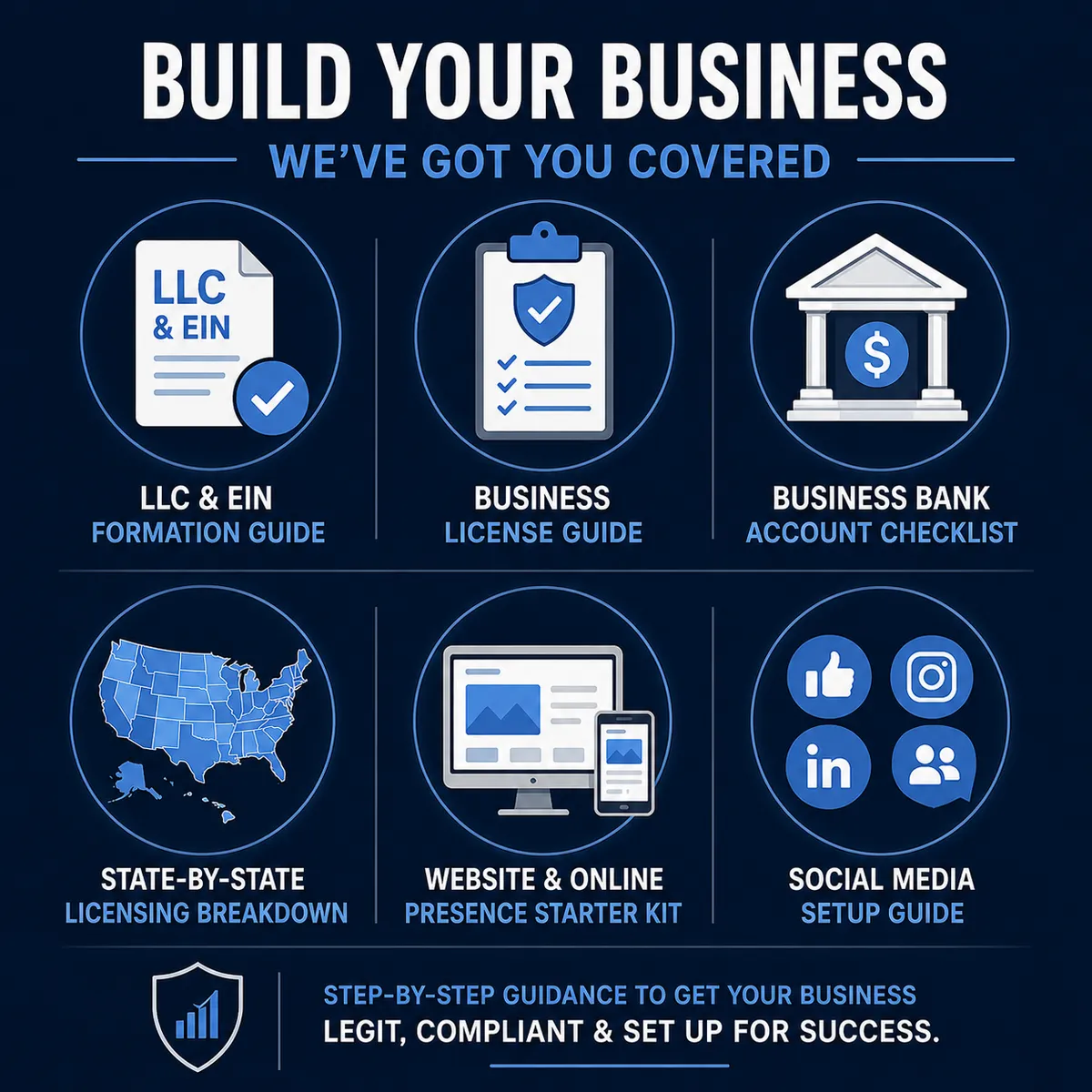
• Setting up your LLC and EIN — the right structure to actually receive compensation, not your own name
• Getting your general business license in place — separate from any commercial brokerage licensing, and required no matter which state you're in
• Opening a business bank account under that LLC, so referral payments never touch your personal account
• A state-by-state breakdown of licensing requirements — most states don't require a separate commercial brokerage license at all, and for the ones that do, exactly what's required and how to get there
• The licensing process itself, if you're taking the next step from referral partner to fully licensed broker
• Building a website and online presence that makes you look like what you're about to become — before the first lender or title company ever checks
• Setting up social media the right way, so your presence backs up the entity instead of looking like an afterthought
The Tools
Who It's For?
Finished The Playbook?
Real estate agents who've finished the DSCR Referral Playbook.
That's it. That's the audience. Whether you've already closed your first referral or you're about to, there's one part of this worth having in place before the money starts moving — not after.
Who It's Not For?
• You haven't finished the Playbook yet. This builds on what's taught there — start there first.
• You're looking for a shortcut around your state's actual requirements. This shows you exactly what's required. It doesn't erase it.
• You just want a document, not the follow-through. Setting the business up is still on you — this is the roadmap, not a substitute for doing it.
Price and Guarantee
The Broker Switch is $147. For the first 30 days after you finish the Playbook, it's $67. After that, it's back to $147
— no exceptions, no extensions. Everything above is included.
7-day money-back guarantee.
Go through it, and if it isn't what you expected, email me and I'll refund it. No conditions.
Meet the Founder

For more than 27 years I've worked on one side or another of the mortgage business — commercial lending, business banking, residential, and investor financing. I'm also a Washington State Certified Real Estate Finance Instructor.
I've spent over a decade running my own commercial mortgage brokerage — the entity, the banking, the licensing, all of it. This is the exact setup I built for myself, laid out so you don't have to learn it by trial and error the way I did.
Frequently Asked Questions
Why wasn't this part of the Playbook?
The Playbook is deliberately focused on one thing — screening and referring deals. This is a separate, deliberate next step for when you're ready to build the actual business behind it, not something that got left out by accident.
Do I need to already be licensed?
No — that's exactly what this walks you through, if you're ready to take that step. If you just want to stay a referral partner, you don't need this.
Will I need a commercial brokerage license in my state?
Depends on the state. Most states don't require a separate commercial brokerage license at all, so once your entity is set up, you're operating as a broker in the plain business sense. Some states do require one — and even then, you can often still do business there through a lender that's licensed in that state. This walks you through exactly where your state lands and what, if anything, you need to do about it.
Does this work in every state?
It works in every state — but what "working" means varies. Most states don't require a separate commercial brokerage license to operate this way. This shows you exactly where your state lands, including working through a lender already licensed there if yours is one of the states that requires it.
Is there a guarantee?
7 days, no conditions. Email and I'll refund it.